
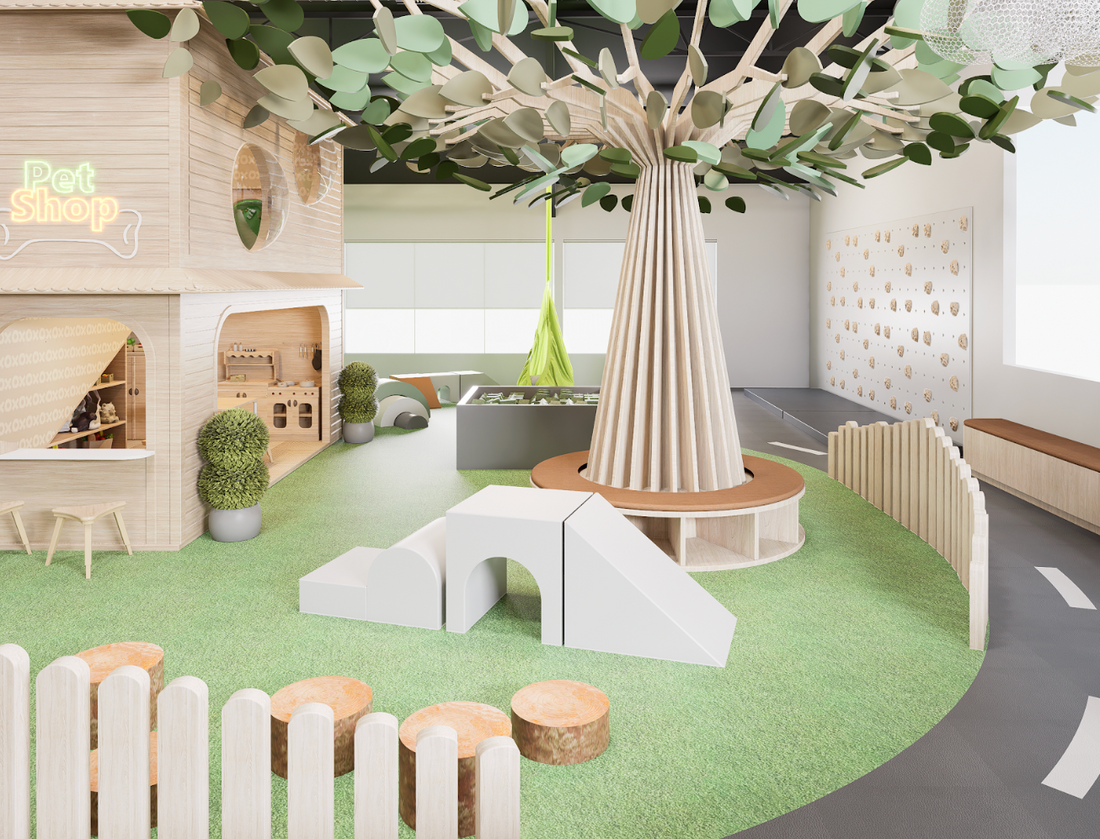
Designing an indoor playroom is one of the best ways to give your children a safe, engaging space to learn, grow, and burn off energy without leaving home. Indoor play spaces are more than just fun; they promote gross motor development, creativity, social skills, and even emotional well-being! Whether you’re working with a spare room, basement, or dedicated playroom, the right design can turn any area into a haven of adventure.
In this guide, we’ll walk through the most effective indoor playroom design ideas, from swings and slides to imaginative playhouses and creative stations. These elements not only transform your space into a world of excitement but also provide developmental benefits that will serve your children for years to come.
Why Indoor Playrooms Matter
Before diving into specific design ideas, it’s worth highlighting why indoor playroomss are so impactful. Children today spend more time indoors and on screens than ever before. By designing a purposeful play space, you create opportunities for:
-
Physical activity: Building strength, balance, and coordination.
-
Cognitive development: Encouraging problem-solving, spatial awareness, and creative play.
-
Social interaction: Providing a space where siblings and friends can collaborate, share, and play together.
-
Imagination: Fostering storytelling, pretend play, and role-playing scenarios.
A thoughtfully designed indoor play space becomes more than just entertainment, it’s an investment in your child’s growth and development.
Swings: YES...Indoors!
Indoors, they offer the same thrill with the added benefit of being available year-round. From classic rope swings to modern sensory swings, there are endless options.
Key Considerations for Indoor Swings
-
Space and clearance: Ensure there is enough room for safe swinging, both front-to-back and side-to-side.
-
Installation: Swings should be anchored into strong ceiling joists or mounted on sturdy frames.
-
Types of swings: Younger children often benefit from bucket seats with harnesses, while older kids may enjoy hammock swings, trapeze bars, or cocoon swings for relaxation.
Swings not only provide fun but also help with sensory regulation, balance, and coordination.
Climbing Structures: Encouraging Strength and Confidence
Climbing walls, rope ladders, and cargo nets are some of the most exciting ways to incorporate movement indoors. Climbing challenges children both physically and mentally, helping them build problem-solving skills as they decide where to place their hands and feet.
Options for Indoor Climbing Structures
-
Rock walls: Can be customized with different holds for varying skill levels.
-
Rope ladders and cargo nets: Add an element of flexibility and movement, improving grip strength and stability.
-
Combination structures: Pair climbing walls with slides or monkey bars for a multi-skill play station.
For younger children, choose low-profile climbing options with wide steps and handrails. For older kids, opt for taller, more technical designs that encourage growth and challenge.
Slides: Adding Speed and Excitement
Slides bring an instant thrill to any play space. They can be integrated with lofted playhouses, climbing walls, or used as stand-alone features.
Types of Indoor Slides
-
Straight slides: Simple, safe, and ideal for younger children.
-
Curved or spiral slides: Add excitement and a space-saving footprint.
-
Tube slides: Fully enclosed and adventurous, often used with multi-level structures.
Slides promote core strength, coordination, and balance while providing an irresistible incentive to keep kids active.
Playhouses: The Heart of Imagination
Playhouses are where creativity comes alive! They act as a stage for pretend play, role-playing, and storytelling, activities that are essential for cognitive and emotional development.
Playhouse Themes to Inspire Creativity
-
Fairy tale cottages for story lovers.
-
Farmhouses or markets for role-playing.
-
Treehouses for adventure seekers.
-
Modern minimalist houses that complement contemporary interiors.
Add accessories like windows, porches, or chalkboard walls to personalize the experience. A playhouse becomes more than a structure, it’s a world of possibility.
Trampolines: Jumping into Joy
Trampolines provide cardiovascular exercise, improve coordination, and deliver endless fun. Indoor trampolines can range from small toddler-sized models to larger enclosed designs.
Safety Tips for Indoor Trampolines
-
Always use safety nets and padding.
-
Choose the right size for your space.
-
Limit use to one child at a time (depending on the size and weight limits).
With proper safety measures, trampolines are one of the best tools for channeling energy in a safe and healthy way.
Zip Lines: Bringing Adventure Indoors
Adding a zip line to your playroom brings a true “wow factor.” With careful installation and padding underneath, zip lines create exhilarating experiences right at home.
Benefits of Indoor Zip Lines
-
Encourages bravery and confidence.
-
Builds upper body strength as kids hold on.
-
Adds a unique feature that sets your playroom apart.
This high-adventure element is perfect for families looking to create a play space that goes beyond the ordinary.
Arts and Crafts Stations: Creativity Beyond Movement
Playgrounds don’t have to be all about physical activity. Balancing active play with creative outlets is key. An arts and crafts station gives children a place to express themselves through drawing, painting, and building.
Essentials for an Arts and Crafts Corner
-
Storage bins and shelves for organization.
-
Tables and chairs scaled to your children’s size.
-
Rotating supplies like markers, paints, glue, and beads to keep activities fresh.
-
Display areas where kids can showcase their creations.
This type of station rounds out your indoor playground, ensuring kids have opportunities for both active and creative play.
Designing Your Indoor Playroom: Practical Tips
When planning your indoor playroom, keep these practical considerations in mind:
-
Safety first: Use soft flooring like mats, foam tiles, or rugs to cushion falls.
-
Age-appropriate design: Match features to your child’s current abilities while allowing room to grow.
-
Flow and zones: Divide your playroom into zones: active play (swings, climbing), creative play (arts and crafts), and imaginative play (playhouses).
-
Durability: Invest in high-quality materials that can withstand years of use.
-
Flexibility: Modular pieces allow you to change the setup as your children’s interests evolve.
How Smart Playrooms® Can Help
At Smart Playrooms®, we specialize in designing indoor playrooms that combine safety, function, and creativity. Our team helps families transform unused rooms into vibrant spaces where children can thrive. From swings and slides to climbing walls and imaginative playhouses, we design and install custom solutions tailored to your home and your children’s ages and interests.
Our process includes expert guidance on layout, safety standards, and product selection. We also provide customizable play equipment designed to grow with your children. Whether you want a compact play corner or a fully immersive adventure zone, our goal is to make your vision a reality.
Fostering Growth
Designing an indoor play space is about more than keeping kids entertained, it’s about fostering growth, imagination, and family connection. From classic swings to adventurous zip lines, every feature you add enhances your child’s development and makes your home a more joyful place.
With thoughtful planning and the right expertise, your playroom can become the ultimate indoor adventure. Ready to bring your dream playroom to life? Contact Smart Playrooms® today and let us help you design a space where imagination knows no bounds!


