
As summer reaches its midpoint, many parents begin thinking ahead — about the new school year, about readiness, about whether their child is where they need to be.
What most don't realize is that the single most powerful thing a child can do to prepare for learning isn't academic. It's physical.
Movement and cognitive development are deeply connected. The research is clear and consistent: children who move more learn better — with stronger focus, improved memory, greater emotional regulation, and higher confidence in the classroom.
Summer, with its open schedules and unhurried days, is the ideal time to build movement into the rhythm of your child's life in a way that lasts well into the school year and beyond.
At Smart Playrooms, we design spaces that make that possible — every day, at home, without a second thought.
Why Movement and Learning Are Inseparable
The brain and body are not separate systems. Physical activity directly influences the neurological processes that support learning.
When children engage in active, physical play — climbing, swinging, balancing, jumping — several important things happen simultaneously:
- The brain releases BDNF (brain-derived neurotrophic factor), a protein that supports the growth of new neural connections
- Executive function improves, including working memory, attention, and the ability to shift between tasks
- Emotional regulation strengthens, which is foundational to a child's ability to sit, focus, and engage in a classroom setting
- Proprioceptive input — the body's awareness of itself in space — is processed and integrated, which supports handwriting, reading, and fine motor skills
In short, a child who has moved their body is a child who is neurologically prepared to learn.

The Role of Outdoor vs. Indoor Movement
Outdoor play is irreplaceable — fresh air, natural environments, and unstructured time outside offer their own developmental benefits.
But outdoor play is weather-dependent, schedule-dependent, and not always available when a child's body needs it most.
An intentional indoor movement space fills that gap reliably. A climbing setup, swing, or obstacle course configuration at home means the benefits of active play aren't conditional on the weather, the season, or the time of day. They're available every morning before school, every afternoon after, and every rainy day in between.
This consistency is what builds the habit — and habits are what carry children through the school year.
What Types of Movement Support Learning Most
Not all movement has the same effect. The types of physical activity most strongly linked to cognitive and academic development share a few characteristics: they require problem-solving, they challenge the body in multiple planes of movement, and they build progressively as skills develop.
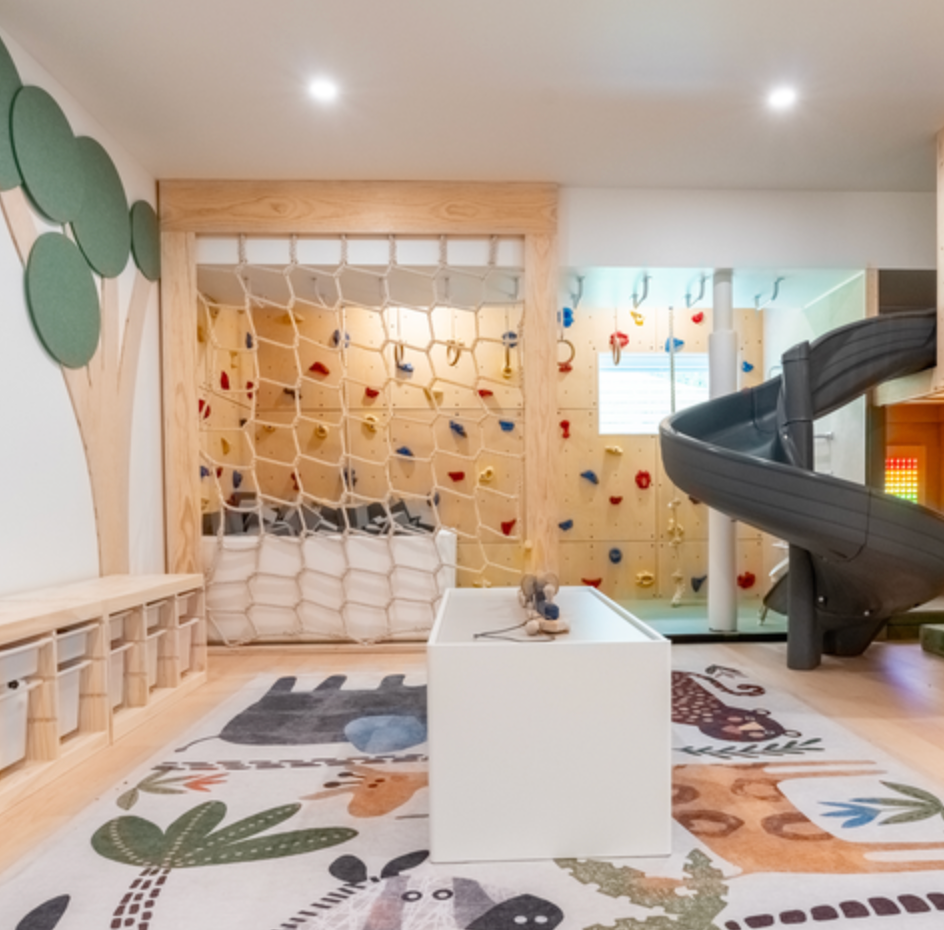
Climbing is one of the most cognitively rich forms of movement available to children. It requires spatial reasoning, bilateral coordination, strength, and decision-making — all simultaneously. Our rock wall panels and monkey bars are designed specifically to offer this kind of layered, full-body challenge.
Swinging provides vestibular input — stimulation of the inner ear system that governs balance, spatial orientation, and sensory processing. Children who receive regular vestibular input tend to show improved focus and reduced sensory-seeking behavior. Our cocoon swing and platform swing options are designed to support this need in a calm, controlled way.
Obstacle and challenge courses develop sequencing, planning, and physical confidence. When a child figures out how to move their body through a self-designed course, they are practicing the same cognitive skills that underlie reading comprehension and mathematical reasoning.

Summer as a Foundation, Not a Break
The traditional view of summer is that it's a pause — a break from learning, from structure, from development. The research suggests something different.
Summer is an opportunity. The reduced pressure and open time allow children to engage in the kind of deep, sustained physical play that the school year rarely permits. And the habits, skills, and neurological development that happen during those months don't disappear in September.
Children who spend summers moving — really moving, with challenge and repetition and progression — return to school with stronger bodies, sharper focus, and greater confidence than those who don't.
A Smart Playrooms setup is an investment in that foundation. The monkey bars your child masters in July become the focus and determination they bring to a classroom in October.
Building the Habit at Home
The most effective way to make movement a consistent part of a child's life is to make it effortless — to remove the friction between a child and the opportunity to move.
That means having the right equipment in the right place, designed for independent use, at any time of day.
A well-designed playroom does this quietly and reliably. It doesn't require a parent to set up an activity, drive somewhere, or manage a schedule. It simply exists — and children, given the right environment, will use it.
Consider building your space around:
- A climbing wall or rock wall panel for full-body strength and spatial challenge
- Monkey bars for upper body development and crossing the midline
- A swing for vestibular regulation and calm focus
- Open floor space for obstacle configurations and creative movement
Start with one anchor piece and build from there. The goal is a space that invites movement naturally — not one that has to be explained or encouraged.

The Long View
Parents who invest in a thoughtful indoor play environment during the summer often notice something unexpected: the benefits extend far beyond what they anticipated.
It's not just that their child is more active. It's that they're calmer. More focused. More willing to try hard things. More confident in their own abilities.
That's the connection between movement and learning made visible — in your own home, every day.
Ready to set your child up for their best school year yet?
Explore our Movement Essentials collection to build a space that supports your child's development all summer long — and every season after.


