
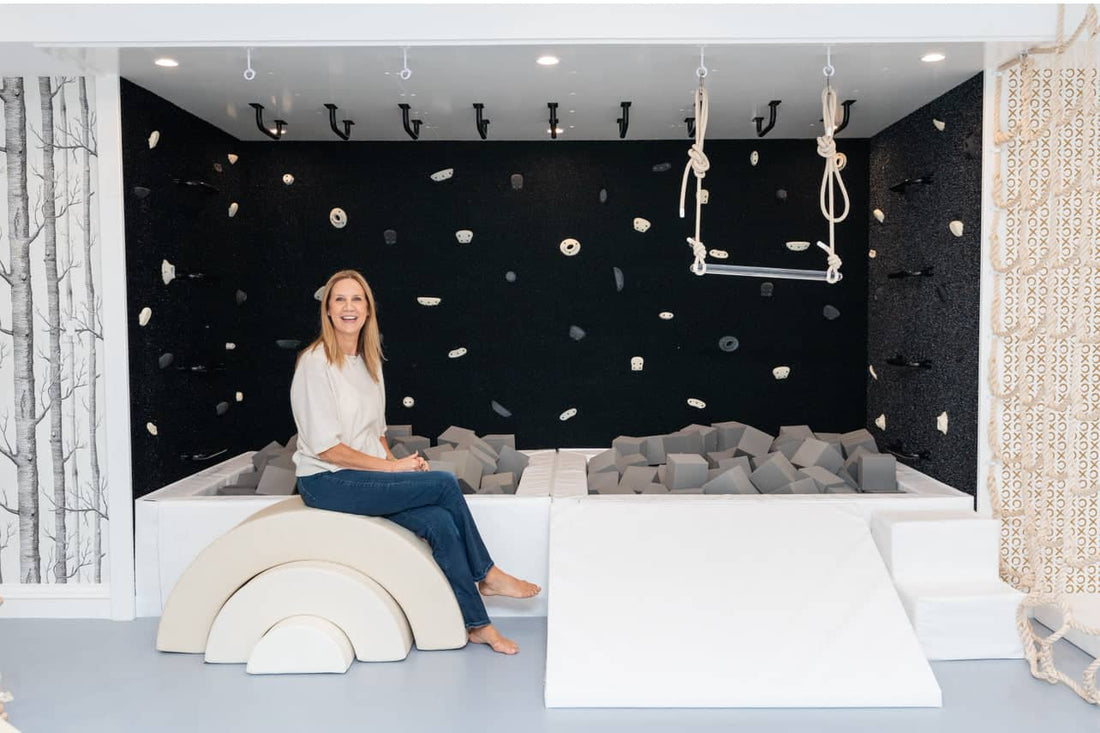
Childhood is a time of boundless exploration, with each day holding the promise of new adventures. Few activities light up kids’ faces like climbing, the thrill of finding a foothold, gripping a hold, and pulling themselves higher builds not just muscles, but also confidence, resilience, and determination. By bringing climbing indoors, you can transform a simple playroom into an inspiring environment that encourages both physical development and imaginative play.
At Smart Playrooms®, we design play spaces that blend sophistication with adventure. Our custom climbing structures and rock wall panels aren’t just equipment, they’re invitations to move, imagine, and succeed. Below, we’ll explore the most popular types of climbing structures for playrooms, their unique benefits, and how they help kids build strength, strategy, and confidence.
Traditional Climbing Walls
When most people think of climbing, the image of a tall, vertical wall comes to mind. Traditional climbing walls mirror the outdoor rock-climbing experience, often with harnesses and ropes for safety. Bringing one into a playroom turns it into a mini climbing gym, helping children develop upper-body strength, coordination, and focus. The added challenge of finding a “route” to the top encourages problem-solving and determination. For older kids, these walls create the perfect balance between fun and fitness, while also teaching the importance of safety gear and responsibility.
Bouldering/Climbing Walls
Bouldering is climbing in its purest form, no ropes, no harnesses, just strength, strategy, and thick safety mats below. Bouldering walls are shorter than traditional ones, making them ideal for playrooms. The lower height ensures a safer environment while still challenging kids to use body tension, technique, and problem-solving skills. Parents love bouldering walls because they’re easier to supervise and don’t require extensive equipment. Kids love them because every climb feels like a puzzle to solve, boosting both their confidence and physical endurance.
Rope Ladders and Climbing Nets
For families looking to add variety, rope ladders and climbing nets offer a completely different type of challenge. Their movement and flexibility test kids’ grip strength, balance, and coordination in ways solid walls don’t. Nets encourage creative climbing in multiple directions, up, across, or diagonally, while rope ladders mimic the swaying bridges of outdoor adventure parks. These structures are relatively easy to install with sturdy anchors and heavy-duty ropes, and they add a dynamic, playful vibe to any climbing setup.
Modular Climbing Panels
For flexibility and long-term use, modular climbing panels are a fantastic option. These panels can be arranged and rearranged to create routes of varying difficulty, evolving as your child grows and improves. Families with multiple kids especially appreciate the adaptability, as panels can be configured to suit different skill levels in the same space. They also come in a wide range of colors and textures, letting you blend the climbing wall seamlessly with your décor, or make it a bold focal point. Add mats around the base for safety, and you’ve got a professional-style climbing gym tailored to your home.
Freestanding Climbing Structures
If wall installation isn’t ideal, freestanding climbing structures provide a complete solution. These versatile units often combine different elements, like nets, rope bridges, ladders, monkey bars, or slides, into one adventure station. Their biggest advantage is portability. You can rotate or move them around the playroom, refreshing the layout and keeping things exciting. For families who want a dynamic setup without permanent installation, freestanding structures offer the perfect mix of flexibility and fun.
Why Climbing Structures Matter
Climbing isn’t just about physical activity, it’s about developing resilience, creativity, and problem-solving! Each hold, step, or stretch challenges kids to think critically and trust their bodies. Climbing builds strength, balance, and endurance, but it also strengthens confidence, determination, and perseverance. Whether it’s reaching the top of a tower or figuring out the best path across a net, kids learn valuable life lessons about persistence and problem-solving every time they climb.
Smart Playrooms®: Designing Play Spaces That Inspire
At Smart Playrooms®, we believe climbing structures are more than just equipment, they’re tools for growth, exploration, and joy. Our designer climbing walls and panels combine beauty with functionality, ensuring your playroom feels like an extension of your home, not just a gym. From bold climbing towers to subtle modular panels, we help families select the right structures to fit their space, style, and children’s developmental needs.
Are you ready to create an indoor play space that challenges, excites, and inspires your child? Contact Smart Playrooms® today to start designing a climbing environment where safety, style, and adventure come together.


